Written by: The Sydney Decking Solutions Team
Last Updated: August 2026
Key Takeaways
· Older Mosman homes usually need decking materials that feel natural beside brick, sandstone, weatherboard, timber trims and established gardens.
· Hardwood timber is often the strongest visual match for heritage-style or character homes, because it has warmth, grain and a traditional finish.
· Spotted Gum and Merbau can both work well, but the right choice depends on the home’s colour palette, sun exposure and maintenance expectations.
· Composite decking can suit some older homes, but only when the colour and finish are subtle enough to avoid a “too modern” look.
· If the property is heritage-listed or sits in a heritage conservation area, approval requirements should be checked before major external work begins.
For Mosman’s older and heritage-style homes, the best decking materials are usually natural hardwoods such as Spotted Gum or Merbau, because they offer the right mix of traditional appearance, outdoor durability and warm timber character. Composite decking can also work, but only when the colour and finish are carefully chosen to suit the home rather than overpower it.
Choosing the best deck materials for Mosman heritage homes involves more than appearance alone. It affects how the outdoor area connects with the original house, how much maintenance the deck will need, and whether the finished space feels like it belongs.
Mosman has many older homes with strong character features, from traditional brickwork and weatherboard detailing to mature gardens and sandstone landscaping. A deck added to this type of property should not look like a random modern platform attached to the back of the home. It should feel considered, practical and in keeping with the existing style.
For homeowners planning a new deck or replacing an older one, speaking with experienced deck builders mosman can help narrow down the material choice before the project moves too far into design.
What Should You Consider Before Choosing the Decking for an Older Mosman Home?
Start with the home’s existing materials, the deck’s visibility, and the amount of sun, shade and moisture the area receives. A good decking material should suit the house first, then the lifestyle.
Older homes often have more design constraints than newer builds. The exterior colours, trims, roofline, garden layout and existing paths all influence what will look right.
A deck at the rear of the home may allow more flexibility, especially if it is not visible from the street. A front-facing deck, entry platform or raised outdoor area usually needs more care because it can affect the overall character of the property.
Site conditions also play an important role. A shaded deck under trees will age differently from a deck that gets full afternoon sun. A deck near garden beds, pools or coastal air may also need stronger attention to drainage, ventilation and surface maintenance.
Before picking a board, it helps to ask three simple questions:
· Will this material suit the age and style of the home?
· How much maintenance are we realistically willing to do?
· Will the colour still look right once it weathers?
That last question is easy to overlook. Some materials look great when newly installed but may not suit the home as they fade, darken or weather over time.
Is Natural Timber Still the Safest Choice for Heritage-Style Homes?
In many cases, yes. Natural timber is often the safest visual choice for heritage-style homes because it has warmth, texture and variation that suits older architecture.
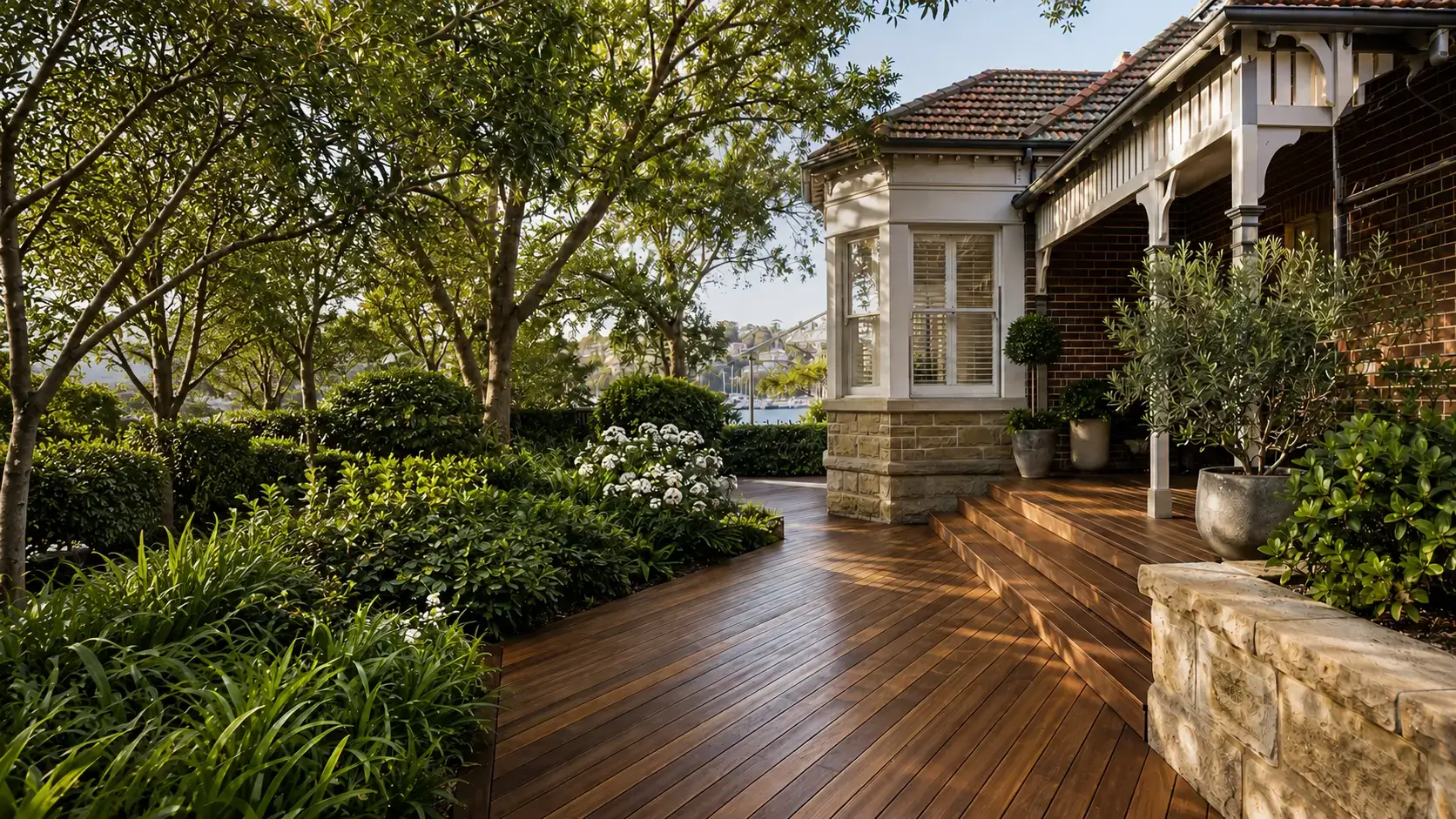
Timber tends to sit comfortably beside traditional materials. It works with brick, sandstone, rendered walls, timber windows, older verandah details and established gardens. That natural grain helps soften the transition between the house and the outdoor space.
Hardwood timber also gives homeowners more flexibility with finish. It can be oiled for a richer look or allowed to weather into a softer tone, depending on the style of the property and the owner’s preference.
The main trade-off is ongoing maintenance. Timber decks need cleaning, oiling and periodic checks, especially in areas exposed to sun, rain and moisture. That does not make timber a bad choice; it just means homeowners should understand the care involved before choosing it.
For character homes, the visual benefit is often worth it. A well-selected timber board can make a new deck feel like part of the original home rather than a separate addition.
Which Timber Works Better: Spotted Gum or Merbau?
Neither is universally better. Spotted Gum often suits homeowners who want a natural Australian hardwood look, while Merbau is better for those who prefer a deeper reddish-brown tone. Both can work, but they create a different feel.
Spotted Gum has a more varied grain and colour range. It can feel relaxed, natural and well suited to leafy or garden-facing homes. For older properties where the aim is to keep the deck visually soft, this can be a strong option.
Merbau has a richer, warmer appearance. It can work well with homes that already include darker timber details, warm brickwork or classic outdoor finishes. It can also create a more polished look, which some homeowners prefer for entertaining areas.
Neither timber is automatically the better choice. The right choice depends on the home’s exterior and the owner’s maintenance expectations.
If the main decision is between these two hardwoods, this related guide on Merbau vs. Spotted Gum for Sydney decks is worth reading before finalising the material.
Can Composite Decking Suit a Character Home?
Composite decking can suit some character homes, but the board needs to be chosen carefully. Subtle colours and natural-looking textures usually work better than bold grey, black or highly uniform finishes.
Composite decking is popular because it generally requires less maintenance than natural timber. For busy homeowners, that can be a practical advantage.
The main risk is that the decking can look visually out of place. Some composite boards look very modern, especially when the colour is flat or the finish is too smooth. On an older Mosman home, that can make the deck feel disconnected from the building.
If composite is being considered, real samples should be checked outside in natural light. A board that looks fine indoors may look completely different beside brick, sandstone, weatherboard or garden paving.
For heritage-style properties, softer brown tones and lightly textured finishes are usually safer than dramatic colours. The goal is not to make the deck disappear, but it should not dominate the home either.
How Do Heritage Rules Affect Decking Work?
If a home is heritage-listed or located in a heritage conservation area, homeowners should check approval requirements before changing external areas. Decking work can sometimes affect the appearance or significance of a property.
Not every older home is heritage-listed, and not every deck will trigger the same approval pathway. Still, it is worth checking early rather than after design work has already started.
Service NSW states that changes to a heritage-listed place may need approval from the local council or the Heritage Council of NSW before development starts.
For Mosman homeowners, this means the material choice may not be the only consideration. The deck’s size, position, visibility, stairs, balustrades and connection to the existing building can all matter.
This is also where a simpler design can be helpful. A deck that respects the scale and style of the home is usually easier to justify than one that looks oversized or visually out of place.
What Colours Usually Work Best With Older Mosman Homes?
Warm timber tones, natural browns and softer weathered finishes usually work better with older Mosman homes than harsh modern colours. The deck colour should connect with the home’s existing materials.
Colour is one of the easiest ways to get a deck right or wrong. A beautiful board can still feel unsuitable if the tone fights with the house.
Brick homes often suit warmer hardwood tones. Weatherboard homes may work better with softer, more natural finishes. Homes with sandstone, cream trims or leafy garden settings usually need a deck colour that feels calm rather than heavy.
It is also worth thinking about how the colour will look from inside the home. If the deck connects to a living room, kitchen or dining area, the transition from indoor flooring to outdoor decking should feel intentional.
A strong contrast can work in some modern homes. For heritage-style homes, a more subtle connection often looks better.
What Should You Avoid When Choosing Decking for a Heritage-Style Property?
Avoid materials that look too artificial, colours that overpower the home, and design details that feel unrelated to the original architecture. The deck should complement the home rather than compete with it.
A few common mistakes can make a deck feel out of place:
· choosing a board colour from a small indoor sample only
· using very modern grey or black boards beside warm traditional materials
· ignoring the style of existing stairs, trims and handrails
· making the deck too large for the proportions of the home
· forgetting about drainage and airflow under the structure
The decking boards are only one part of the overall design. Board direction, edging, stairs, balustrades and transitions all affect whether the deck looks cohesive or out of place.
This is why material choice should happen alongside design planning, not separately. A good timber board can still look wrong if the deck shape, scale or detailing does not suit the property.
What Is the Best Overall Material Choice?
For many older Mosman homes, hardwood timber is the strongest all-round choice because it offers a natural finish, traditional character and design flexibility. Composite can still work where lower maintenance is important, as long as the finish is carefully selected.
There is no single product that suits every property. A small garden deck, a raised entertaining area and a shaded side deck may each need a different approach.
As a general rule, timber is usually the more natural match for heritage-style homes. It gives warmth and texture, and it can be finished in a way that suits the home’s existing colours.
Composite decking may be suitable where maintenance is the main concern. But the board should be selected carefully so it does not look too modern for the property.
With more than 35 years of building and carpentry experience, Sydney Decking Solutions looks at more than the decking board itself. The team considers how the material will sit beside the home’s exterior, how exposed the area is, and how much maintenance the homeowner wants to manage.
The best decking material for an older Mosman home is the one that balances appearance, durability, maintenance and context. It should make the outdoor area more useful while still respecting the character of the home.
Final Thoughts
Decking for a Mosman heritage-style home should feel calm, practical and connected to the property. The aim is not to chase the trendiest material. It is to choose a finish that suits the home now and still feels right as it ages.
Hardwood timber will often be the most natural option, especially for homes with brick, sandstone, weatherboard or established gardens. Composite decking can also be considered, but the colour and surface finish need extra care.
Before making a final decision, compare real samples outside, check how they look beside the home’s existing materials, and consider whether any heritage approval requirements apply. A well-planned deck should feel like it was always meant to be there.