Skip to content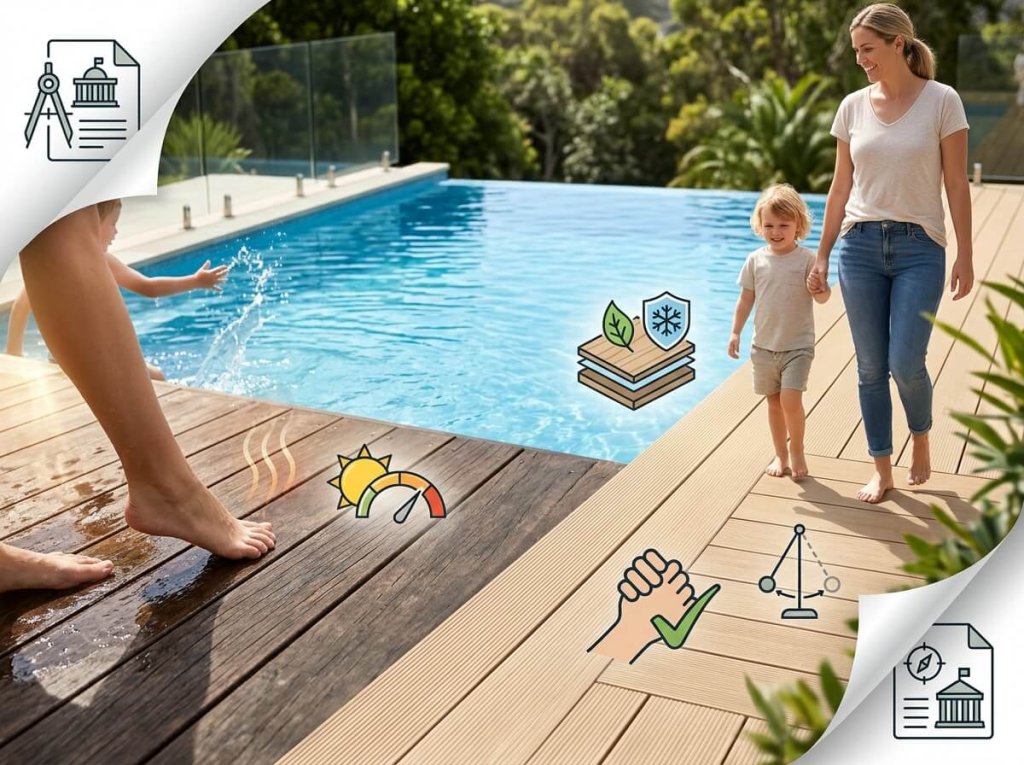
Key Takeaways
-
The Slip Rating Law: Under the National Construction Code (NCC), all outdoor decking exposed to wet conditions—including pool surrounds—must achieve a minimum slip resistance rating of P4 or R11.
-
Testing Methods: Slip resistance is measured via the Wet Pendulum Test (which provides a ‘P’ rating) or the Oil Wet Ramp Test (which provides an ‘R’ rating).
-
Material Choice: While traditional hardwoods like Spotted Gum offer natural grip when reeded or properly finished, modern capped composite boards are specifically engineered to guarantee continuous R11/P4 or P5 slip ratings.
-
Council Approvals: Depending on the height of your deck and its proximity to the pool safety barrier, you may require specific development consent from your local Sydney council.
-
Heat Management: Lighter-coloured composites with “cool-touch” technology or light Australian hardwoods are crucial to prevent the decking from burning bare feet in the summer sun.
Creating a luxurious poolside oasis requires much more than just picking a great colour. When water, bare feet, and excited children mix, safety must be the absolute priority.
As premier deck builders Sydney relies on for premium outdoor living spaces, we see many homeowners completely unaware of the strict safety and slip-resistance laws governing pool surrounds in New South Wales. If your deck fails to meet these standards, you are not just risking severe injuries—you could face significant compliance issues during safety inspections.
Whether you are looking to upgrade an old concrete surround or build a raised timber platform, here is the technical guide to ensuring your Sydney decking project is 100% compliant, safe, and stunning.
What Slip Rating Does My Pool Deck Need in NSW?
In NSW, the National Construction Code (NCC) mandates that all outdoor decking exposed to weather and frequent wetness, such as pool surrounds, must have a minimum slip resistance rating of P4 or R11.
When looking at decking materials, you will see slip resistance expressed in two ways, governed by the Australian Standard AS 4586:
-
The ‘P’ Rating (Wet Pendulum Test): This is the most common test for outdoor surfaces. A pendulum swings across a wet surface; the more grip it finds, the higher the rating. For flat pool surrounds, the minimum legal requirement is P4. If your pool deck includes a ramp steeper than a 1:14 gradient, the requirement jumps to a high-grip P5.
-
The ‘R’ Rating (Oil Wet Ramp Test): This alternative test involves a person walking on an oil-covered ramp. To pass standard pool decking requirements, the material must hit an R11 rating.
Always ask your builder to provide the slip resistance test certificate before purchasing materials.
Which is Safer Around Pools: Timber or Composite Decking?
Composite decking is generally considered safer around pools because it is completely splinter-free, highly slip-resistant, and immune to the rotting and warping caused by constant chlorine and moisture exposure.
Both materials can be used effectively, but they perform very differently under heavy moisture:
-
Composite Decking: Premium composite boards are manufactured with specific textures designed to meet P4/R11 or P5 slip ratings out of the box. They feature concealed fastening systems (meaning no hot or popped screws to step on) and will never splinter into bare feet.
-
Timber Decking: Hardwoods like Merbau and Spotted Gum look beautiful against blue pool water. However, timber becomes slippery when covered in algae or if the wrong sealer is applied. It requires rigorous annual maintenance—including cleaning off chlorine residue and re-oiling—to maintain its structural integrity and grip.
Do I Need Council Approval for Pool Decking in Sydney?
Yes, you often need council approval for pool decking in Sydney if the deck is raised, covers a large area, or structurally interacts with the mandatory pool safety isolation fencing.
In NSW, pool safety barriers are strictly regulated. If you build a new deck that changes the ground height around your existing pool fence, you may accidentally compromise the legal height requirement of the barrier, making your pool non-compliant. Always consult with a licensed builder who understands how to integrate decking flawlessly with glass or aluminium pool fencing to pass a private certifier’s inspection.
How Can I Keep My Pool Deck Cool in the Summer Sun?
You can keep your pool deck cool by selecting light-coloured Australian hardwoods or premium composite boards featuring specific “cool-touch” technology designed to reflect UV rays and reduce surface temperature.
Nobody wants a pool deck that burns bare feet in January. Traditional dark timber or cheap, dark plastics can absorb massive amounts of heat. When designing Sydney decking for pools, we highly recommend avoiding dark browns and charcoals. Instead, opt for lighter Spotted Gum tones or composites with heat-mitigating technology, which can sit up to 20 degrees cooler than standard materials in direct sunlight.
Why Should You Hire Specialised Deck Builders Sydney for Pool Areas?
You should hire specialised deck builders for pool areas because proper joist spacing, adequate water drainage, and compliant slip-resistant surfaces are critical to preventing structural rot and severe slipping hazards.
Building around a pool is vastly different from building a standard patio. The sub-frame will be constantly bombarded by chemically treated water. As the premier deck builders sydney relies on, we use specific heavy-duty joist framing, proper fall angles to prevent water pooling, and premium stainless-steel fixings that will not rust from salt-chlorinator splashback.
Ready to Upgrade Your Pool Area?
Don’t gamble with safety around your swimming pool. Ensure your new entertaining area looks incredible while meeting every strict NSW safety code.
Contact Sydney Decking Solutions today. We specialise in high-end, compliant pool surrounds that offer the perfect blend of luxury and peace of mind.